9 Privacy Steps to Install a Garden Screen Oasis
When soil temperatures exceed 55°F and last frost has passed, the steps for installing a vegetable garden screen begin with marking a north-south axis to maximize photosynthetic efficiency. The screen serves dual purposes: wind reduction at 40-60% permeability and visual separation of growing zones. Growers in Zones 5-8 install trellis systems between April 15 and May 30, anchoring posts 24 inches deep in clay-amended loam. The resulting microclimate elevates ambient temperature by 3-5°F and reduces transpiration stress in cucurbits and legumes.
Materials
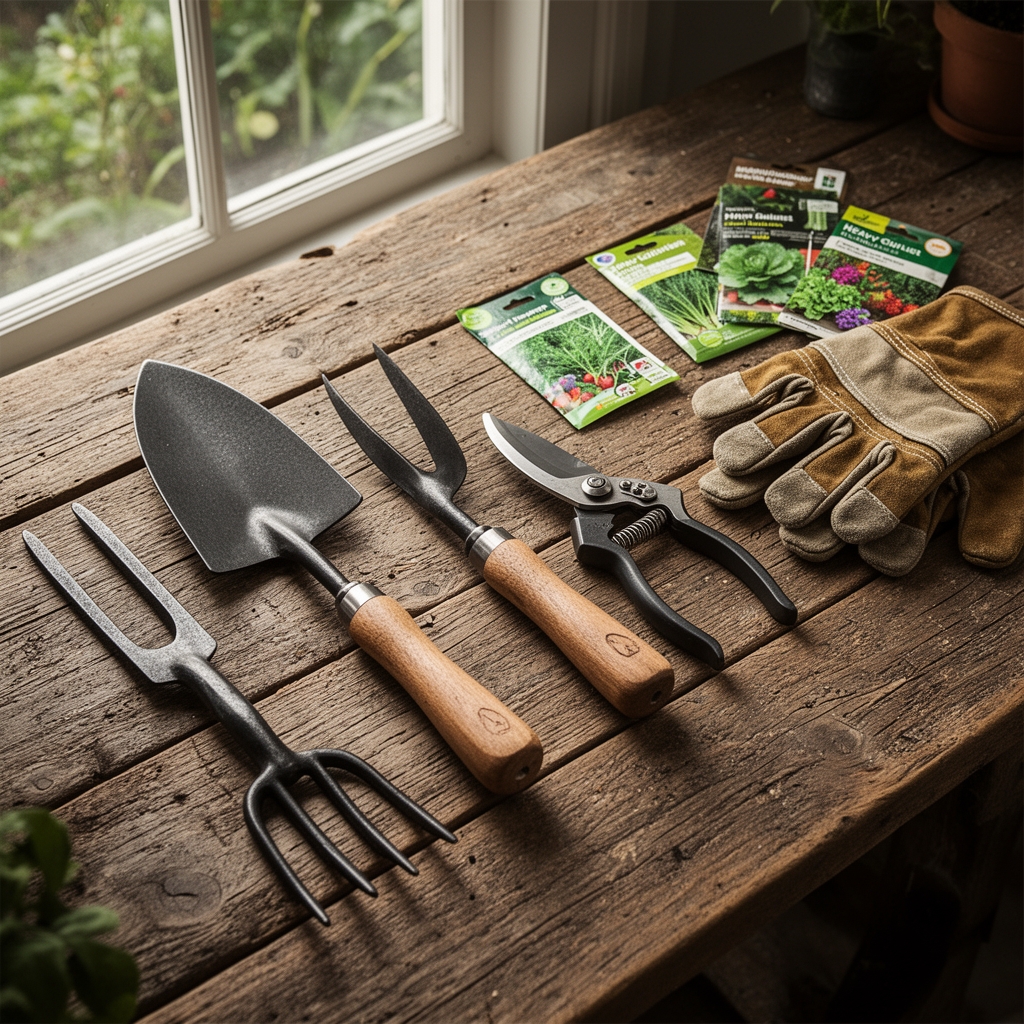
Structural components require pressure-treated 4×4 posts rated for ground contact, galvanized eye-bolts rated to 200 pounds, and 6-gauge vinyl-coated wire mesh with 2-inch openings. Soil amendments for post holes include native clay at 40%, coarse sand at 30%, and aged compost at 30% to achieve cation exchange capacity above 15 meq/100g.
For climbing vegetable cultivars, apply blood meal (12-0-0) at 2 pounds per 100 square feet during bed preparation. This high-nitrogen input supports vegetative growth in pole beans (Phaseolus vulgaris) and cucumbers (Cucumis sativus). Incorporate rock phosphate (0-3-0) at 5 pounds per 100 square feet to promote root establishment in the rhizosphere. Balanced organic fertilizer at 4-4-4 analysis sustains fruiting once flowering begins.
Mycorrhizal fungi inoculant contains Glomus intraradices spores at 120 propagules per gram. Apply 1 teaspoon per transplant hole to colonize lateral roots within 14 days. pH meters accurate to 0.1 units verify soil acidity between 6.2 and 6.8 for optimal nutrient availability.
Timing
Hardiness Zones 5 and 6 require installation between April 20 and May 10, when soil reaches 50°F at 4-inch depth. Zone 7 growers begin March 25 to April 15. Zone 8 windows open March 1 through March 20.
Frost-date windows dictate transplant timing. Set pole bean seeds 1 inch deep seven days after last frost. Transplant cucumber seedlings with two true leaves 10-14 days post-frost when nighttime lows stabilize above 50°F. Pea cultivars (Pisum sativum) tolerate 28°F and install 4-6 weeks before last frost for June harvest.
Phases

Sowing Phase (Weeks 1-2)
Dig post holes 10 inches in diameter to 24-inch depth on 8-foot centers. Insert posts and backfill with amended soil in 4-inch lifts, tamping each layer to 90% compaction. Attach horizontal support wires at 12, 36, and 60 inches above grade using galvanized eye-bolts torqued to 25 foot-pounds. Tension wire to 50 pounds measured with fish scale.
Pro-Tip: Coat the below-grade portion of wooden posts with copper naphthenate preservative to extend service life to 15 years in high-moisture environments.
Transplanting Phase (Weeks 3-4)
Direct-sow pole bean seeds 4 inches apart along the wire base. Plant depth affects emergence rate. Seeds at 0.75 inches emerge in 7 days; those at 1.5 inches require 10 days. Cucumber transplants space 12 inches apart in staggered rows to prevent foliar overlap that reduces airflow by 35%.
Water transplants with 1 quart per plant immediately after installation. Root-zone moisture content should measure 60-70% field capacity using a tensiometer reading of 10-15 centibars.
Pro-Tip: Prune cucumber seedlings to single stem at the second true leaf to redirect auxin distribution toward vertical growth, reducing lateral branching by 40%.
Establishing Phase (Weeks 5-8)
Guide tendrils to wire supports every 3 days during the first two weeks. Cucurbit tendrils coil counter-clockwise and require minimal intervention once contact occurs. Apply 1/2 inch of water every 4 days if rainfall totals less than 1 inch per week. Drip irrigation at 1 gallon per hour per emitter delivers moisture to the 6-12 inch root zone without wetting foliage.
Side-dress with 4-4-4 organic fertilizer at 1/4 cup per plant when flowers appear. Nitrogen excess at this stage produces vegetative growth at the expense of fruit set.
Pro-Tip: Inoculate soil with Trichoderma harzianum at 10^6 CFU per gram to suppress Fusarium wilt and Pythium root rot through competitive colonization of the rhizoplane.
Troubleshooting
Symptom: Yellowing lower leaves with green veins (interveinal chlorosis).
Solution: Iron deficiency due to pH above 7.0. Apply chelated iron (Fe-EDTA) at 1 tablespoon per gallon as foliar spray. Reduce pH with elemental sulfur at 1 pound per 100 square feet, incorporated to 6-inch depth.
Symptom: Wilting at midday despite adequate soil moisture.
Solution: Cucumber beetle (Diabrotica undecimpunctata) feeding on stems transmits bacterial wilt. Apply kaolin clay at 2 tablespoons per quart water as preventative barrier. Remove and destroy infected plants within 24 hours.
Symptom: Blossom-end rot in developing cucumber fruit.
Solution: Calcium deficiency caused by irregular watering. Maintain consistent moisture and apply calcium chloride foliar spray at 2 teaspoons per gallon weekly during fruit development.
Symptom: Powdery white coating on upper leaf surfaces.
Solution: Powdery mildew (Podosphaera xanthii) thrives in relative humidity above 70%. Spray potassium bicarbonate solution (1 tablespoon per gallon) at 7-day intervals. Prune lower leaves to improve air circulation.
Symptom: Stunted growth with purple leaf undersides.
Solution: Phosphorus deficiency in soils below 55°F. Delay planting until temperature stabilizes or apply liquid fish emulsion (5-1-1) at 2 tablespoons per gallon weekly.
Maintenance
Apply 1 inch of water per week measured with rain gauge. Split applications into two 0.5-inch events to maintain 60% soil moisture content. Mulch with 2 inches of straw around plant bases to reduce evaporation by 30% and suppress weed germination.
Prune lateral shoots below 18 inches on cucumber vines to concentrate energy in upper fruiting nodes. Remove these shoots at 1/4-inch diameter using sterilized pruners dipped in 10% bleach solution between cuts.
Harvest cucumbers at 6-8 inches length every 2 days to maintain auxin signaling for continued flower production. Leaving mature fruit on vines triggers senescence and reduces total yield by 25%.
Fertilize every 21 days with 4-4-4 organic blend at 1/4 cup per plant. Broadcast in 6-inch circle 4 inches from stem base and water in with 1 quart per application.
FAQ
How deep should posts be installed for 6-foot screen height?
Bury posts one-third their total length. An 8-foot post requires 24-inch hole depth, leaving 6 feet above grade for 5 feet of screening plus 12 inches for top wire attachment.
Which vegetables grow best on privacy screens?
Pole beans, cucumbers, and snap peas produce highest yields per square foot. Armenian cucumber (Cucumis melo var. flexuosus) tolerates heat above 90°F better than slicing types.
Can I install screens in partial shade?
Yes, but yields drop 40% with less than 6 hours direct sun. Orient screens north-south and plant shade-tolerant peas on east-facing sides.
How long until full privacy coverage?
Pole beans reach 5 feet in 45-60 days from sowing. Cucumbers achieve 80% coverage in 35-50 days from transplanting when trained vertically.
What wire gauge prevents sagging under crop weight?
Use 12-gauge high-tensile wire for main supports. Each linear foot of mature cucumber vine weighs 2-3 pounds. An 8-foot span supports up to 48 pounds before deflection exceeds 2 inches.