9 Large-Scale Steps to Prepare a Country Garden
Transforming raw pasture or overgrown land into productive growing space requires methodical soil amendment and site assessment. Learning how to prepare a garden for a country vegetable garden begins with understanding that large-scale plots demand different strategies than suburban raised beds. The scent of turned earth mixed with decomposing organic matter signals the beginning of a process that will span weeks, not days.
Materials
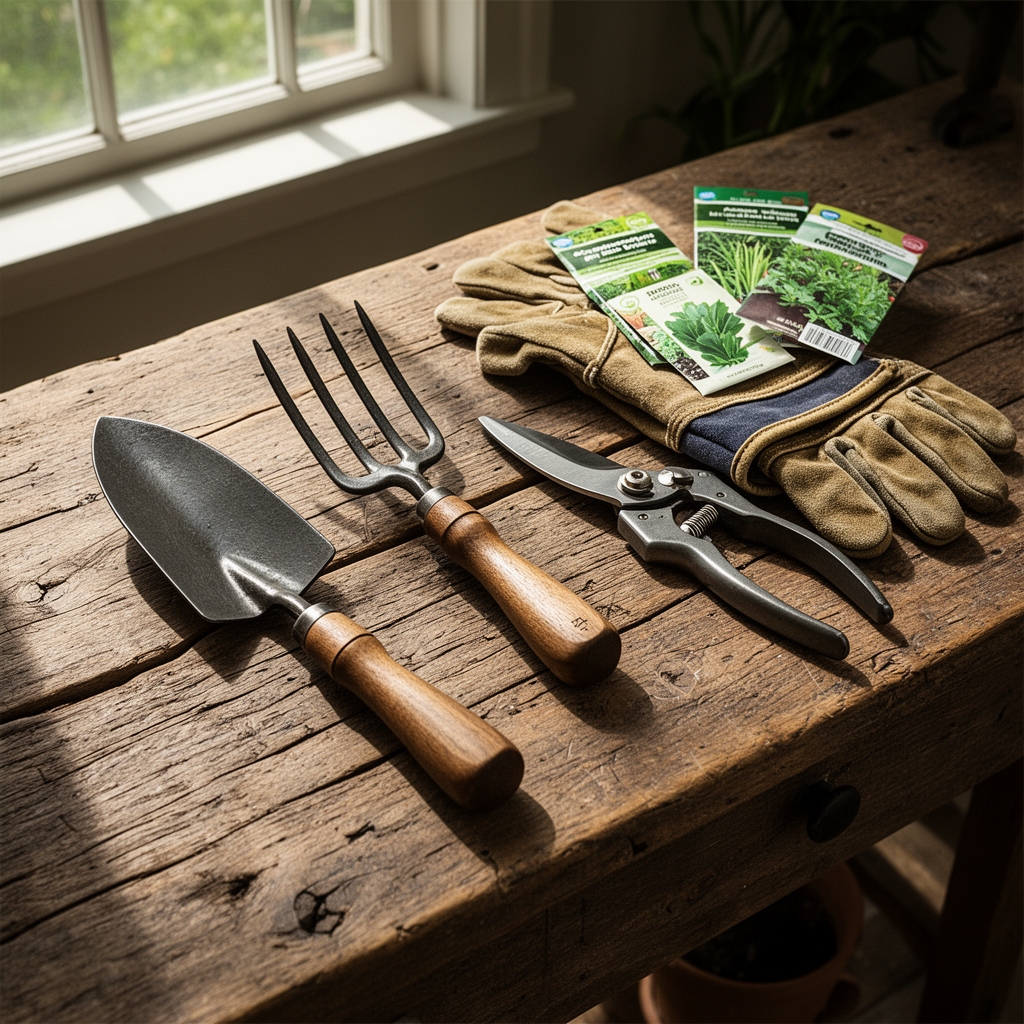
Successful preparation depends on matching amendments to existing soil chemistry. Test kits measuring pH, nitrogen, phosphorus, and potassium establish baseline data. For acidic soils below 6.0 pH, agricultural lime at 50 pounds per 1,000 square feet raises pH by approximately one full point. Alkaline soils above 7.5 pH require elemental sulfur at 10 pounds per 1,000 square feet to lower pH by half a point.
Balanced organic fertilizers rated 4-4-4 or 5-5-5 provide slow-release nutrients without salt burn. Alfalfa meal contributes nitrogen and triacontanol, a natural growth stimulant. Rock phosphate supplies phosphorus over multiple seasons while improving cation exchange capacity. Greensand delivers potassium and trace minerals including iron and magnesium.
Compost should be aged for six months minimum, with a carbon-to-nitrogen ratio near 25:1. Fresh manure burns plant roots and introduces weed seeds. Well-rotted manure shows no recognizable bedding material and crumbles easily. Mycorrhizal fungi inoculants containing Glomus species colonize root systems and extend nutrient uptake by 10 to 100 times the root zone diameter.
Heavy equipment needs include a walk-behind tractor or tiller rated for sod-breaking, a broadfork for sub-surface aeration, and landscape fabric or cardboard in 4-foot widths. Avoid rototillers lighter than 200 pounds. They bounce across compacted ground rather than penetrating it.
Timing
Hardiness zones dictate the preparation window. Zones 3 through 5 require fall preparation for spring planting, allowing freeze-thaw cycles to break down soil clods. Zones 6 through 8 permit either fall or early spring work, beginning six weeks before the last frost date. Zones 9 through 11 benefit from summer preparation during the hottest months when soil sterilization from solar heat reduces pathogen loads.
Last spring frost dates range from late May in northern zones to mid-February in southern regions. First fall frost arrives between early September and late November. Schedule initial tilling when soil moisture allows a handful to form a loose ball that crumbles under light pressure. Waterlogged soil smears and compacts. Dust-dry soil blows away.
Phases

Site Clearing and Initial Tillage
Mow existing vegetation to 2 inches. Remove rocks larger than a fist. Mark underground utilities before any digging. Till to 8-inch depth, making perpendicular passes to break sod completely. Rake out rhizomes from invasive grasses like quackgrass and Bermuda grass.
Pro-Tip: Apply cardboard or landscape fabric immediately after first tilling. Cover with 4 inches of wood chips. This smother-mulch system kills remaining vegetation while building soil structure through decomposition.
Amendment Integration
Broadcast lime or sulfur according to test results. Spread compost at 2 cubic yards per 1,000 square feet. Distribute rock phosphate at 5 pounds and greensand at 10 pounds per 1,000 square feet. Till amendments to 6-inch depth, mixing thoroughly with existing soil.
Apply mycorrhizal inoculant directly into planting holes rather than broadcasting. Fungal hyphae establish best when in contact with root surfaces. A quarter teaspoon per transplant suffices.
Pro-Tip: Create drainage swales on slopes exceeding 3 percent grade. Dig trenches 18 inches deep along contour lines, spacing them 30 feet apart. Backfill with gravel to prevent erosion.
Bed Formation and Pathways
Shape raised beds 4 feet wide and 8 to 12 inches tall. Length depends on site dimensions but should not exceed 50 feet for efficient access. Leave 3-foot pathways between beds for wheelbarrow passage. Compact pathways with a lawn roller or repeated foot traffic to suppress weeds.
Broadfork beds after shaping. Insert tines to full depth every 6 inches and rock handle backward to lift and fracture subsoil without inversion. This preserves soil horizons while improving aeration and auxin distribution to root tips.
Pro-Tip: Install drip irrigation before mulching. Position emitter lines 6 inches from bed centers. Pressure-compensating emitters at 12-inch spacing deliver uniform water across elevation changes.
Troubleshooting
Symptom: Yellow lower leaves with green veins indicate iron chlorosis.
Solution: Lower pH with sulfur or apply chelated iron foliar spray at 0.5 ounces per gallon.
Symptom: Stunted growth with purple-tinged leaves signals phosphorus deficiency.
Solution: Side-dress with bone meal at 2 pounds per 100 square feet or apply liquid fish fertilizer at label rates.
Symptom: Wilting despite adequate moisture suggests root-knot nematodes.
Solution: Solarize soil by covering with clear plastic for 6 weeks during peak summer heat. Plant French marigolds (Tagetes patula) as a trap crop the following season.
Symptom: White powdery coating on leaf surfaces indicates powdery mildew.
Solution: Space plants to improve air circulation. Apply potassium bicarbonate spray at 1 tablespoon per gallon weekly.
Symptom: Holes in leaves with slime trails point to slug damage.
Solution: Apply diatomaceous earth around plant bases. Set beer traps in shallow containers flush with soil surface.
Maintenance
Irrigate to deliver 1 inch of water per week, measured with rain gauges placed throughout the garden. Clay soils require one deep watering weekly. Sandy soils need three lighter applications. Water before 9 AM to reduce fungal disease pressure.
Mulch beds with 3 inches of straw or shredded leaves after soil warms to 60°F. Replenish mulch mid-season to maintain depth. Pull mulch 2 inches away from plant stems to prevent crown rot.
Side-dress heavy feeders like tomatoes and squash with compost tea every 3 weeks. Brew tea by steeping 2 pounds of finished compost in 5 gallons of water for 24 hours with aeration. Apply at full strength.
Monitor for pests twice weekly. Hand-pick hornworms and beetles into soapy water. Release beneficial insects including ladybugs and lacewings at label-recommended rates when aphid populations appear.
FAQ
How deep should I prepare soil for root vegetables?
Till to 12 inches minimum for carrots, parsnips, and potatoes. These crops require loose soil to form straight, uniform roots.
Can I plant immediately after tilling?
Wait 2 weeks after amendment incorporation. This settling period allows microbial populations to reestablish and prevents transplant shock from disturbed soil structure.
What cover crops benefit vegetable gardens?
Winter rye prevents erosion and adds organic matter. Crimson clover fixes nitrogen. Buckwheat suppresses weeds during summer fallow periods.
How do I manage perennial weeds?
Exclude light with thick mulch layers for one full growing season. Persistent species like dock require mechanical removal of entire taproots.
Should I test soil every year?
Test annually for the first 3 years to track amendment effectiveness. After stabilization, test every 3 years or when crop performance declines.