8 Elevation Steps to Build a Vegetable-Optimized Deck
The scent of sun-warmed tomato foliage rises from waist-height planters, and your knees never meet soil. A well-engineered deck system transforms rooftop or patio space into a functional production zone, combining structural load calculation with nutrient delivery. Steps for building a vegetable garden deck begin with understanding that horizontal surfaces above grade demand precise weight distribution, waterproofing protocols, and substrate selection matched to container depth. This is not ornamental gardening elevated. This is intensive cultivation where mycorrhizal fungi colonize raised beds bolted to joists rated for 80 pounds per square foot, and where cation exchange capacity determines whether your peppers achieve commercial yields or languish in peat-based mediocrity.
Materials

Frame the deck with pressure-treated lumber rated for ground contact, even though it sits above grade. Use galvanized joist hangers rated to 500 pounds each. For decking boards, composite materials resist rot but retain midday heat. Cedar or redwood provide thermal moderation.
Substrate pH governs nutrient availability. Blueberries demand 4.5 to 5.5 pH; achieve this with sulfur-amended pine bark fines. Brassicas and alliums thrive at 6.5 to 7.0 pH; incorporate dolomitic lime at 5 pounds per cubic yard. Base substrate on 50 percent aged compost, 30 percent coconut coir, and 20 percent perlite. This combination offers 60 percent water-holding capacity with adequate aeration.
Fertilizer ratios align with crop type. Leafy greens respond to 4-4-4 organic meal applied at 2 pounds per 100 square feet every four weeks. Fruiting crops require higher phosphorus during flowering: shift to 2-8-4 when first blossoms open, applying 1.5 pounds per 100 square feet. Kelp meal at 1 pound per cubic yard supplies trace minerals and cytokinins that promote lateral root development.
Install drip irrigation with pressure-compensating emitters spaced 12 inches apart. Overhead watering invites foliar disease and wastes 40 percent of applied water to evaporation. A backflow preventer and 200-mesh inline filter prevent emitter clogging. Use 0.6 GPH emitters for containers smaller than 5 gallons; use 1.0 GPH for half-barrel planters.
Timing
Hardiness zones dictate planting windows. Zone 7 gardeners sow cool-season crops (lettuce, spinach, snap peas) on March 15, two weeks before the average last frost of April 1. Warm-season transplants (tomatoes, peppers, eggplant) go out May 10, ten days after frost risk drops below 10 percent.
In Zone 9, schedule two distinct growing seasons. Plant tomatoes February 20 for harvest before June heat pushes night temperatures above 75 degrees Fahrenheit, which halts fruit set. Begin a second tomato planting August 1 for October through December production.
Succession planting extends harvests. Sow arugula every 14 days from March through May, then resume September through October. Stagger bush bean plantings at three-week intervals for continuous pods.
Phases
Sowing Phase
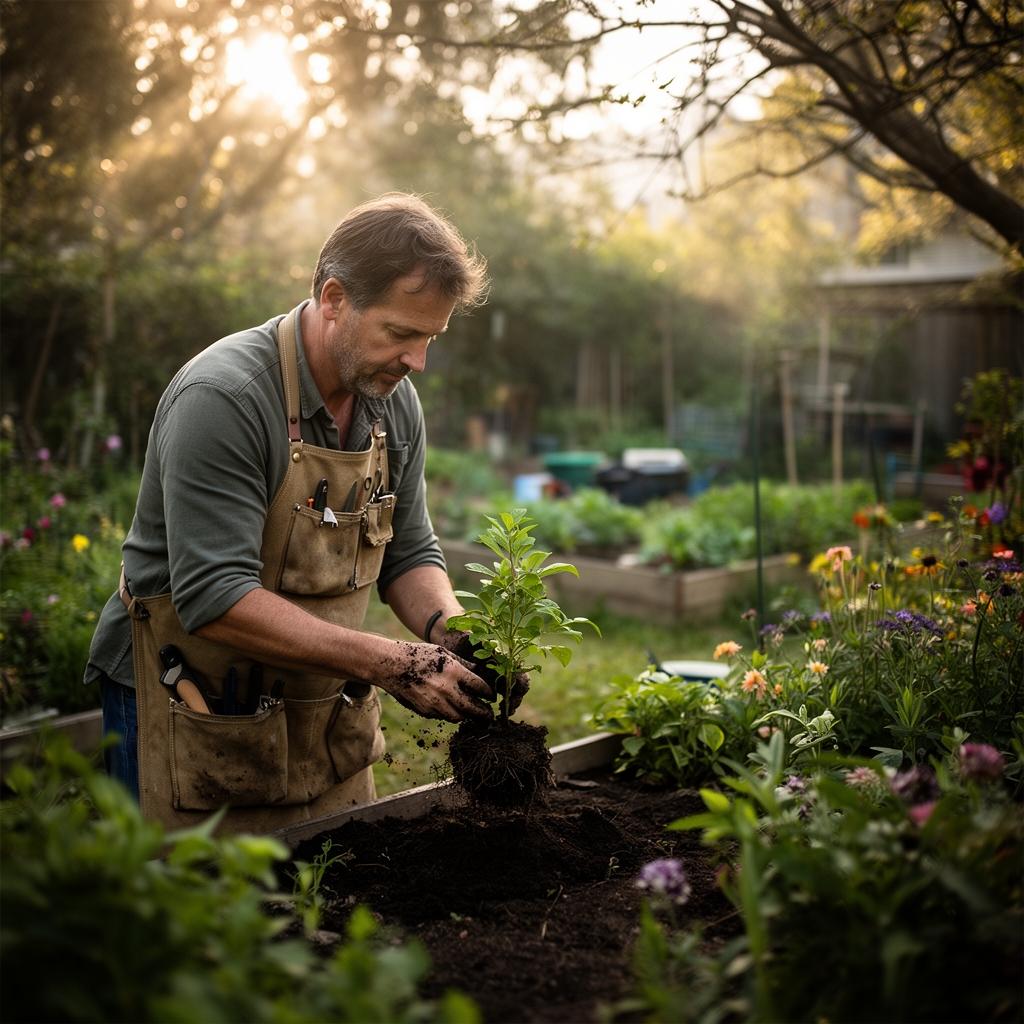
Direct-seed carrots, radishes, and mesclun into containers at least 10 inches deep. Carrot germination requires consistent moisture in the top half-inch of substrate; water twice daily until radicles emerge at day seven. Firm soil after sowing to ensure seed-to-substrate contact. Large air pockets cause erratic germination.
Pro-Tip: Inoculate legume seeds with Rhizobium bacteria powder immediately before sowing. Coat seeds by shaking in a bag with inoculant at a 4:1 seed-to-powder ratio by volume. Rhizobial colonies fix atmospheric nitrogen, reducing fertilizer needs by 30 percent.
Transplanting Phase
Harden seedlings over seven days by reducing water to once per day and exposing them to outdoor conditions for progressively longer periods. Dig planting holes twice the root ball width. Bury tomato stems up to the first true leaves; adventitious roots emerge from buried stem tissue, expanding the root system by 40 percent.
Pro-Tip: Prune tomato suckers at a 45-degree angle when they reach 2 inches long. Angular cuts shed water and reduce pathogen entry. Retain the sucker below the first flower truss to balance vegetative vigor and fruit load.
Establishing Phase
Apply 2 inches of shredded hardwood mulch around transplants, leaving a 3-inch bare zone at the stem base to prevent collar rot. Mulch moderates substrate temperature swings by 15 degrees Fahrenheit and reduces evaporation by 25 percent.
Foliar-feed with liquid kelp at 2 tablespoons per gallon weekly for the first month. Kelp-derived auxins stimulate root hair proliferation, improving water uptake during the critical establishment window.
Pro-Tip: Install reflective aluminum foil around the base of pepper plants. Reflected light increases lower-leaf photosynthesis by 18 percent and deters aphids, which navigate by polarized light patterns disrupted by foil.
Troubleshooting
Symptom: Blossom-end rot on tomatoes and peppers. Dark, sunken lesions appear on fruit bottoms.
Solution: Calcium deficiency caused by inconsistent watering, not calcium absence. Water daily to maintain even moisture. Calcium moves through xylem via transpiration; erratic watering disrupts transport. Apply calcium nitrate foliar spray at 1 tablespoon per gallon if symptoms appear.
Symptom: Interveinal chlorosis on new leaves. Veins remain green while tissue yellows.
Solution: Iron deficiency induced by high pH. Drench substrate with chelated iron (Fe-EDDHA) at 1 teaspoon per gallon. Lower pH long-term by incorporating sulfur at 0.5 pounds per cubic yard.
Symptom: Powdery white coating on squash leaves.
Solution: Powdery mildew thrives in humidity above 70 percent with poor air circulation. Space plants 24 inches apart. Spray with potassium bicarbonate solution (1 tablespoon per gallon) weekly. Remove infected leaves and dispose of them off-site.
Symptom: Stunted growth with purple leaf undersides.
Solution: Phosphorus deficiency or cold substrate. Phosphorus uptake ceases below 50 degrees Fahrenheit. Delay planting or use black plastic mulch to warm substrate. Side-dress with bone meal at 2 tablespoons per plant if temperature is adequate.
Symptom: Holes in brassica leaves with green frass present.
Solution: Cabbage looper larvae. Apply Bacillus thuringiensis var. kurstaki at labeled rates every seven days. Bt protein crystals paralyze larval gut cells. Spray at dusk; UV light degrades Bt within four hours.
Maintenance
Water to maintain substrate moisture at 60 percent of field capacity. Insert a finger 2 inches deep; if dry, apply 1 inch of water, measured with a rain gauge placed among plants. Deep watering encourages roots to explore the full container depth.
Feed every two weeks with fish emulsion diluted to half strength (1 tablespoon per gallon). Alternate with compost tea brewed for 24 hours with active aeration to maintain dissolved oxygen above 6 ppm. High oxygen levels favor beneficial bacteria over anaerobic pathogens.
Prune indeterminate tomatoes to two main stems. Remove all growth below the first flower cluster to improve air circulation. Stake plants with 6-foot bamboo poles, tying stems with cloth strips in a figure-eight pattern to prevent girdling.
Scout for pests twice weekly. Check leaf undersides for aphid colonies and whitefly nymphs. Dislodge aphids with a strong water spray. Introduce Aphidius colemani parasitoid wasps at a rate of 1 per square foot for biological control.
Rotate crop families annually, even in containers. Solanaceae (tomatoes, peppers) deplete potassium; follow with legumes that fix nitrogen. This rotation reduces soilborne pathogen buildup by 50 percent.
FAQ
How deep should containers be for root vegetables?
Carrots require 10 inches minimum; parsnips need 14 inches. Shallow containers cause forked, stunted roots. Use fabric pots to air-prune roots and prevent circling.
Can I grow vegetables in partial shade?
Leafy greens tolerate four hours of direct sun. Fruiting crops require eight hours minimum for adequate photosynthesis to support fruit development. Monitor light with a meter; 300 foot-candles is the minimum photosynthetic threshold.
What is the maximum weight per square foot?
Saturated substrate weighs 75 pounds per cubic foot. A 12-inch-deep bed adds 75 PSF; verify that deck joists and beams support this plus a 40 PSF live load. Consult structural drawings.
How often should I replace substrate?
Refresh 30 percent of substrate volume annually. Organic matter mineralizes at 5 percent per year. Add compost and adjust pH each spring based on soil tests conducted in fall.
Do I need to insulate containers in winter?
Roots die at 20 degrees Fahrenheit. In zones colder than Zone 7, wrap containers with bubble wrap or move them against a south-facing wall. Mulch the substrate surface with 4 inches of straw.