6 Ecosystem Steps to Install a Small Garden Pond
A small pond transforms vegetable garden microclimates by moderating temperature swings, attracting pollinators, and establishing a reservoir for drip irrigation. The steps for installing a vegetable garden pond demand attention to hydrology, soil chemistry, and ecosystem succession. Properly executed, a 50-to-200-gallon pond raises ambient humidity by 8-12% within a 15-foot radius, accelerates fruiting in heat-sensitive crops like lettuce, and supports populations of aphid-consuming beetles. Each construction decision affects water retention, nutrient cycling, and the cation exchange capacity of adjacent beds.
Materials

Gather EPDM rubber liner rated for potable water, 45-mil thickness minimum. This material resists UV degradation and root penetration. Acquire underlayment fabric at 8-oz-per-square-yard density to cushion the liner from subsurface stones. Purchase a submersible pump rated at 200 gallons per hour for circulation.
For biological establishment, obtain barley straw pellets to release lignin compounds that suppress algae at pH 6.5-7.5. Add dechlorinator crystals if municipal water exceeds 0.5 ppm chlorine. Source native aquatic plants: pickerel rush (Pontederia cordata), water mint (Mentha aquatica), and dwarf cattail (Typha minima). These species tolerate pH 6.0-7.8 and require no supplemental NPK once established.
Edge the pond with fieldstone or reclaimed brick, avoiding limestone that leaches calcium carbonate and elevates pH above 8.0. Prepare a 4-4-4 organic fish and kelp meal for adjacent vegetable beds. The slow-release nitrogen supports auxin distribution in tomato and pepper transplants positioned near the pond margin.
Timing
Execute excavation in Zones 5-8 during late spring, two weeks after the final frost date when soil temperature at 6-inch depth reaches 55°F. This timing allows liner flexibility and reduces risk of subsurface ice heave. In Zones 9-10, install ponds in early autumn to capitalize on monsoon rains that stabilize water tables.
Introduce aquatic plants when water temperature stabilizes at 60-65°F. This range activates mycorrhizal fungi in root zones and accelerates establishment. Delay fish or tadpole stocking until 30 days post-installation, allowing beneficial bacteria colonies to establish on submerged surfaces and process ammonia at 0.02 ppm or lower.
Phases
Excavation Phase
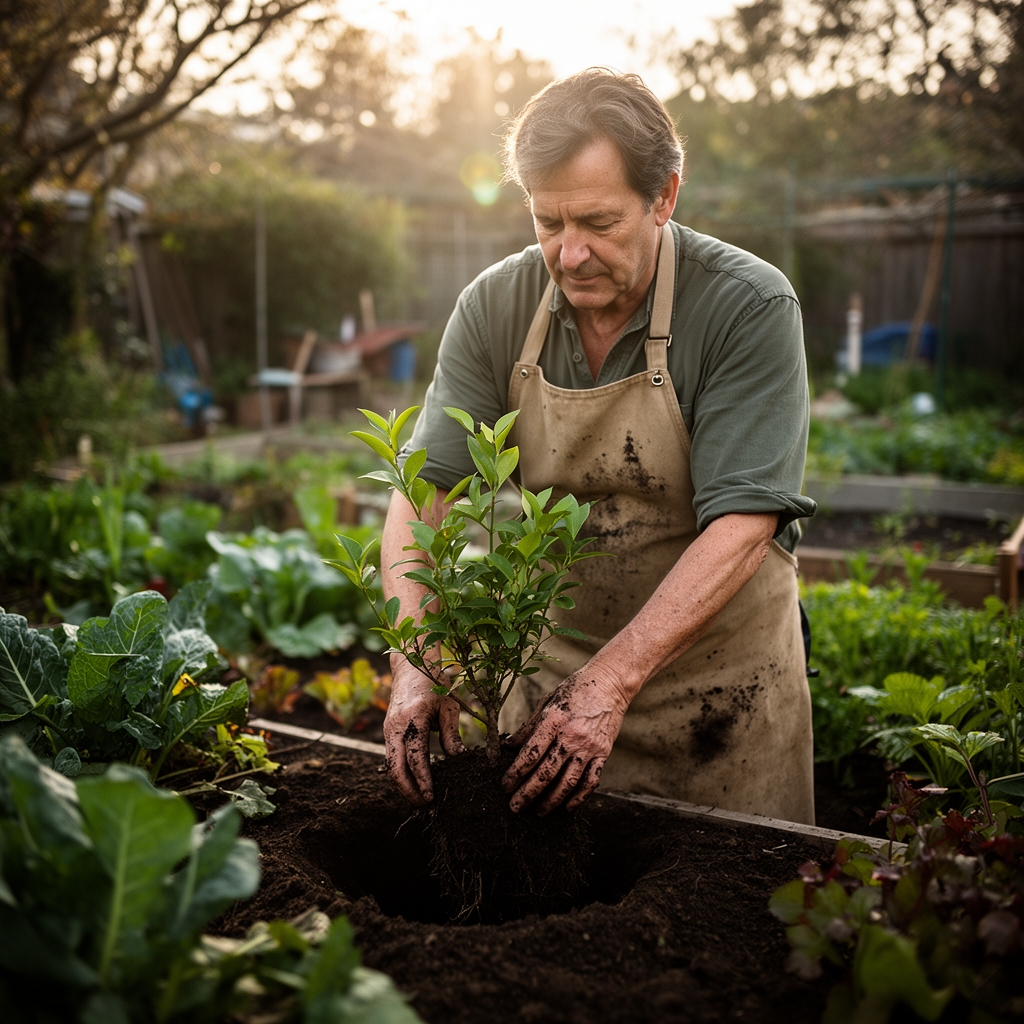
Mark a kidney-shaped outline 6 feet long by 4 feet wide. Excavate to 18-24 inches deep at the center, sloping edges at 20-degree angles to prevent soil slumping. Remove roots exceeding 0.25-inch diameter and sharp stones. Compact the basin floor with a hand tamper at 85% density to prevent settling.
Spread underlayment fabric across the cavity, overlapping seams by 6 inches. Position the EPDM liner with 12-inch overhang on all sides. Fill with dechlorinated water at 50 gallons per hour to allow liner conformity to contours. Trim excess liner to 8 inches and anchor with flat stones weighing 15-30 pounds each.
Pro-Tip: Apply a slurry of bentonite clay at 2 pounds per square yard to the cavity floor before underlayment. This creates a secondary seal that self-heals minor punctures through hydration expansion.
Planting Phase
Position marginal plants in 8-inch fabric pots filled with 2:1:1 loam, sand, and compost. Submerge pots to rim depth at the pond shelf, 6-8 inches below the waterline. Space plants 18 inches apart to allow lateral spread. Pickerel rush establishes rhizomes within 45 days and provides vertical structure for dragonfly emergence.
Install floating plants like water lettuce (Pistia stratiotes) at 30% surface coverage to reduce evaporation by 20% and limit light penetration that triggers algal blooms. Anchor oxygenating plants such as hornwort (Ceratophyllum demersum) in the deep zone using river stones. These species produce dissolved oxygen at 8-10 ppm, supporting aerobic bacteria that decompose organic matter.
Pro-Tip: Inoculate pond water with 1 quart of aged aquarium water or commercial nitrifying bacteria at 1 ml per gallon. This seeds colonies of Nitrosomonas and Nitrobacter species that convert toxic ammonia to nitrate within 14 days.
Integration Phase
Route overflow via a 1-inch PVC pipe to adjacent vegetable beds, delivering nutrient-rich water with NPK ratios averaging 0.5-0.3-0.2 from decomposed plant matter and animal waste. Position the overflow 12 inches above pond waterline to maintain consistent volume.
Mulch the pond perimeter with 3 inches of shredded hardwood bark to suppress terrestrial weeds and moderate soil temperature. Plant moisture-loving vegetables like celery and chard 18-24 inches from the edge, where capillary action maintains soil moisture at field capacity (25-30% volumetric water content).
Pro-Tip: Install a small fountain head on the pump to aerate water and produce white noise that masks urban sounds, reducing stress hormones in nearby plants and enhancing stomatal conductance by 5-8%.
Troubleshooting
Symptom: Green water within 7 days of installation.
Solution: Reduce direct sunlight exposure to under 6 hours daily using shade cloth at 30-40% density. Add barley straw at 8 ounces per 100 gallons. The straw releases hydrogen peroxide as lignin decomposes, inhibiting unicellular algae at concentrations harmless to plants.
Symptom: Mosquito larvae clusters on the surface.
Solution: Introduce gambusia (mosquitofish) at 1 fish per 20 gallons or install a fountain to disrupt still-water breeding zones. Larvae cannot mature in water with surface disturbance exceeding 1 inch per second.
Symptom: Liner buckling or wrinkling after 30 days.
Solution: Drain 25% of water volume and re-stretch liner while refilling slowly. Ensure subsurface hydrostatic pressure remains balanced. Persistent buckling indicates inadequate compaction; excavate and re-tamp at 90% density.
Symptom: Yellowing leaves on aquatic plants despite adequate light.
Solution: Test for iron deficiency using chelated iron strips. Marginal plants require 2-5 ppm iron. Apply chelated iron fertilizer at 1 tablespoon per 50 gallons monthly during the growing season.
Symptom: Pump clogs within 14 days.
Solution: Install a pre-filter sponge rated at 20 ppi (pores per inch). Clean weekly during the first month as organic debris settles. Clogging indicates excess particulate matter; reduce feeding if fish are present.
Maintenance
Refill the pond weekly to replace water lost to evaporation, typically 0.5-1 inch per week in Zones 6-8 during summer. Test pH monthly; maintain 6.8-7.4 using dolomitic lime to raise or elemental sulfur to lower, applying at 1 ounce per 100 gallons per 0.2 pH shift.
Remove senescent leaves from aquatic plants every 10 days to prevent organic buildup that depletes dissolved oxygen. Prune cattails to 6-inch stubs in late autumn to eliminate overwintering sites for pest larvae.
Clean the pump impeller quarterly by disassembling the housing and flushing with a 10:1 water-to-vinegar solution. This dissolves calcium deposits without harming beneficial biofilm. Replace pump every 3-4 years as bearing seals degrade.
In Zones 5-7, de-ice the pond surface in winter using a floating heater set to 40°F. This maintains a gas-exchange hole and prevents toxic methane accumulation under ice. Discontinue pumping when water temperature drops below 45°F to avoid damaging cold-sensitive impellers.
FAQ
How deep should a vegetable garden pond be?
Eighteen to 24 inches prevents complete freezing in Zone 6 and warmer, protecting overwintering aquatic life. Deeper ponds require more excavation but offer better thermal stability.
Can I use tap water directly?
Only after dechlorination. Chlorine concentrations above 0.5 ppm kill nitrifying bacteria essential for nitrogen cycling. Treat with sodium thiosulfate crystals at 1 teaspoon per 50 gallons.
Which vegetables benefit most from pond proximity?
Celery, lettuce, spinach, and Asian greens thrive in the elevated humidity zone. These crops show 15-20% higher yields when grown 18-30 inches from water edges due to reduced transpiration stress.
How often should I add beneficial bacteria?
Initially at setup, then monthly for the first 90 days. Established ponds self-regulate bacterial populations through organic matter decomposition. Reapply after heavy rain events that dilute concentrations.
What prevents pond water from attracting pests?
Circulation via a 200-gallon-per-hour pump eliminates stagnant zones where mosquitoes breed. Introduce predatory insects like backswimmers or maintain 1-2% surface coverage of duckweed to shade larvae habitats.